1. Executive Dossier Summary
Company: The Body Shop International Limited
Jurisdiction: United Kingdom (Global Headquarters: London)
Sector: Personal Care / Retail / Cosmetics / FMCG
Leadership: Mike Jatania (CEO & Executive Chairman), Paul Raphaël (Co-Founder, Auréa Group)
Intelligence Conclusions:
The forensic intelligence assessment of The Body Shop International Limited (TBS) presents a unique and paradoxically complex case study in corporate complicity. Following its acquisition out of administration by the Auréa Group in September 2024, the company has undergone a radical restructuring that has fundamentally altered its geopolitical and ethical risk profile.1 The investigation reveals a corporate entity that is physically exonerated from direct involvement in the Israeli economy yet deeply entangled in the state’s digital military-industrial complex. This dichotomy—between a lack of physical presence and an extreme digital dependency—defines the current intelligence assessment.
The primary intelligence finding indicates a state of Structural Non-Presence regarding traditional retail operations. The Body Shop International possesses no direct retail operations, subsidiaries, logistics hubs, or franchise agreements within the State of Israel. This absence is not the result of a principled ethical boycott or adherence to international human rights standards, but rather the consequence of a decades-old, acrimonious trademark conflict with an unrelated Israeli entity, Fischer Pharmaceuticals (Dr. Fischer).3 This “clone” entity operates a separate, indigenous Israeli chain under the “Body Shop” name, effectively blocking the UK brand from entering the market. Consequently, The Body Shop International generates no tax revenue for the Israeli exchequer, pays no commercial rent to Israeli landlords, and employs no staff within the occupation economy. From a purely kinetic and economic perspective, the target is operationally severed from the Israeli state.3
However, this physical exoneration is sharply contrasted by the company’s Upper-Extreme Digital Complicity. The forensic technographic audit confirms that the company functions as a “Digital Colony” of the Israeli high-tech sector. In its pursuit of operational excellence and digital transformation, TBS has integrated a cybersecurity and cloud infrastructure stack dominated by vendors founded by alumni of Unit 8200, the Israel Defense Forces’ (IDF) elite signals intelligence corps.1 The company relies on SentinelOne for endpoint protection and CyberArk for privileged access management.1 These are not merely incidental vendor relationships; they represent critical operational dependencies. The licensing fees paid by TBS constitute a direct and recurring transfer of capital to firms that function as the commercialized wing of Israel’s offensive cyber-warfare capabilities. By adopting these technologies, TBS effectively outsources the policing of its internal digital borders to the architects of the Israeli surveillance state.
Politically, the investigation documents a catastrophic failure of the “Safe Harbor” test, revealing a governance model characterized by Ideological Capitulation. While the brand historically built its reputation on “activist capitalism,” the current leadership has retreated into “enforced neutrality” when facing geopolitical pressure regarding Palestine. The audit exposes a material Double Standard: whereas the company actively mobilized resources, matched donations, and encouraged staff solidarity for Ukraine in 2022, it explicitly banned Palestinian solidarity symbols in 2025 following legal threats from pro-Israel advocacy groups.4 This asymmetry indicates that the company’s human rights policies are selectively applied based on political expediency and litigation risk, rather than universal ethical principles.
Finally, a residual but significant risk remains regarding Supply Chain Opacity. The company continues to market legacy product lines utilizing Dead Sea Salt. In the absence of a transparent Certificate of Origin confirming Jordanian provenance, there is a high probability that these raw materials are sourced from the Israeli extraction industry in the occupied West Bank.3 This supply chain vector potentially subsidizes the settlement enterprise infrastructure in the Jordan Valley.
Intelligence Assessment: Based on the BDS-1000 scoring criteria, The Body Shop International is classified as a Tier D (Low Complicity) target.5 This classification reflects the “incidental” nature of its digital ties—TBS is a customer, not a strategic partner—and its inability to access the Israeli consumer market. However, its governance behavior regarding Palestinian rights represents a significant reputational failure. The target is therefore categorized not as a primary subject for economic divestment, but as a high-priority target for pressure and engagement regarding internal governance and anti-discrimination policies.
2. Corporate Overview & Evolution
Origins & Founders
The Body Shop was founded in 1976 by Anita Roddick in Brighton, England. The company’s genesis is critical to understanding the current complicity delta, as the brand’s identity is inextricably linked to Roddick’s ethos of “activist capitalism.” Roddick envisioned business not merely as a machine for profit, but as a vehicle for social and environmental change. This foundational ideology creates the high expectations against which the current leadership is judged.6
Founding Capital & Ideology:
Anita Roddick’s background was shaped by the counter-cultural movements of the 1960s and 1970s. It is historically relevant to note that Roddick spent time volunteering on an Israeli kibbutz in her youth. This experience is frequently cited in corporate lore as the inspiration for the company’s “refill” concept and utilitarian aesthetic. However, forensic analysis of Roddick’s later life and the company’s trajectory suggests that this early exposure did not translate into institutional Zionism. On the contrary, Roddick became a vocal critic of globalization and human rights abuses. The company’s “Trade Not Aid” (later “Community Trade”) program established direct supply chains with producers in the Global South, bypassing traditional colonial trading routes. The current complicity risk arises from the erosion of this specific ethical framework under subsequent ownership structures.
Corporate Evolution & Ownership Trajectory
The complicity profile of The Body Shop has shifted dramatically through four distinct eras of ownership. A rigorous forensic understanding of these eras is necessary to separate historical “boycott residue”—data points that are no longer valid—from the current operational reality.
1. The L’Oréal Era (2006–2017): High Complicity (Historical) In a controversial move in 2006, Roddick sold the company to the French cosmetics giant L’Oréal. This period represents the era of maximum complicity for the brand. L’Oréal maintains extensive operations in Israel, including a manufacturing plant in Migdal HaEmek (built on the lands of the depopulated Palestinian village of Al-Mujaydil) and deep collaborative ties with the Weizmann Institute of Science.7 During this decade, The Body Shop was rightfully a primary target of the Boycott, Divestment, Sanctions (BDS) movement. Every purchase from a Body Shop store ultimately contributed to L’Oréal’s consolidated balance sheet, thereby indirectly supporting L’Oréal’s investments in the Israeli economy. Much of the persistent confusion regarding TBS’s status on various boycott lists stems from outdated intelligence gathered during this era.
2. The Natura & Co Era (2017–2023): Reformist / Low Complicity In 2017, the brand was sold to Natura & Co, a Brazilian cosmetics conglomerate known for its “purpose-led” business model. This acquisition marked a significant decoupling from the Zionist supply chain. Natura severed the financial link to L’Oréal and attempted to realign TBS with B-Corp standards.8 Under Natura, the company engaged in vocal social justice campaigns, including support for Black Lives Matter and women’s rights. However, the company struggled with profitability and operational inefficiencies, leading to a decline in its retail footprint and an eventual fire-sale.
3. The Aurelius Group Era (2023–2024): Distressed / Failed In late 2023, the German private equity firm Aurelius Group acquired TBS. This ownership period was short-lived and catastrophic, characterized by a failure to secure working capital and a rapid descent into administration (bankruptcy protection) in the UK, US, and Canada.6
●Forensic Disambiguation: It is vital for analysts to distinguish Aurelius Group (the German private equity firm) from Aurelius Capital (an unrelated Israeli Venture Capital fund investing in defense technology).3 There is no evidence of cross-ownership or strategic partnership between the former German owner of TBS and the Israeli defense fund, despite the shared name. Conflating these entities leads to false positives in complicity assessments.
4. The Auréa Group Era (September 2024–Present): Current Target Baseline As of September 2024, the company was acquired out of administration by the Auréa Group, a growth capital consortium. This represents the current operational baseline for this dossier. The leadership profile of this new ownership group is the primary focus of the governance assessment.2
Leadership & Ownership Assessment (Auréa Group)
The governance of The Body Shop is now controlled by the principals of the Auréa Group. An ideological audit of these individuals is required to determine if the company’s policies are driven by Zionist conviction or commercial pragmatism.
Mike Jatania (CEO & Executive Chairman)
●Background: Mike Jatania is a British tycoon of Indian origin, best known for building the Lornamead Group. His wealth was generated through the acquisition and revitalization of “orphan brands”—heritage personal care labels like Yardley, Lypsyl, and Finesse that had been neglected by major multinationals.3
●Ideological Footprint: A comprehensive screening of donor registries, public advocacy lists, and political affiliations reveals no evidence of Jatania holding membership in Zionist advocacy organizations such as the Conservative Friends of Israel (CFI), Labour Friends of Israel (LFI), or the Jewish National Fund (JNF).4 His philanthropic footprint is focused on UK-based youth charities, including The Prince’s Trust and Save the Children.
●Assessment: Jatania’s governance style is characterized by “compliance pragmatism.” His rapid capitulation to pro-Israel legal pressure in the “Badge Ban” incident (see Domain 2) suggests a leader driven by commercial risk mitigation rather than ideological Zionism. He prioritizes market stability and litigation avoidance over the brand’s activist heritage. He is not an ideologue; he is a capitalist operating in a hostile risk environment.
Paul Raphaël (Co-Founder)
●Background: Paul Raphaël serves as the co-founder of Auréa. His background is deeply rooted in global finance, having served as Executive Vice Chairman at UBS, where he managed wealth management divisions across Emerging Markets, including the Middle East.3
●Ideological Footprint: Crucially, Raphaël is the Founding Chairman of LIFE (Lebanese International Finance Executives) and a member of the International Crisis Group’s advisory council.4 LIFE is a diaspora organization dedicated to the economic advancement of Lebanon.
●Assessment: The presence of a prominent Lebanese financier at the helm of the ownership group provides a structural counter-weight to potential Zionist alignment. Given the state of war and non-normalization between Lebanon and Israel, it is structurally, legally, and socially improbable for a leader of the Lebanese financial community to advocate for strategic integration with the Israeli economy. This suggests that any complicity found within TBS is incidental (tech dependency) or coerced (legal pressure) rather than ideologically driven by its owners.
Analytical Assessment:
The leadership structure of The Body Shop under Auréa Group is ideologically non-Zionist. The “Upper-Extreme” digital complicity exhibited by the company is not a result of a “Zionist agenda” from the board, but rather a result of Technological Determinism—the reliance on best-in-class Israeli cybersecurity to protect a distressed asset—and Corporate Cowardice—the fear of litigation from pro-Israel lobby groups. The company is a “Digital Colony” of Israel, extracting security utility from the state while attempting to remain politically invisible.
3. Timeline of Relevant Events
The following timeline reconstructs the pivotal moments in The Body Shop’s history that define its relationship with Israel, the occupation, and the boycott movement.
| Date |
Event |
Significance |
| 1990s |
Trademark Litigation in Tel Aviv |
TBS UK sues Dr. Fischer (Israeli Pharma) over the “Body Shop” name. The Israeli court rules in favor of Dr. Fischer, permanently blocking TBS UK from the Israeli retail market. This establishes the “Dr. Fischer Firewall”.3 |
| 2002 |
Human Rights Award Controversy |
TBS grants a Human Rights Award to a Palestinian NGO. Following backlash from the Anti-Defamation League (ADL), the company apologizes and scrubs the award from its records, setting a precedent for capitulation.4 |
| 2006 |
Acquisition by L’Oréal |
TBS becomes a subsidiary of L’Oréal. This triggers widespread boycotts due to L’Oréal’s manufacturing presence in Israel and support for the state economy.7 |
| 2017 |
Sale to Natura & Co |
TBS is sold to Natura, severing the financial link to L’Oréal. This technically removes the primary rationale for the historical boycott.8 |
| 2019 |
B-Corp Certification |
TBS achieves B-Corp status, reinforcing its claims of ethical governance. This increases the reputational risk of any supply chain ties to settlements.7 |
| Feb 2022 |
“Stand with Ukraine” Campaign |
TBS launches a global campaign supporting Ukraine against Russian aggression. Stores display flags/badges, and the company matches donations. This sets the “Safe Harbor” precedent for political activism.4 |
| Nov 2023 |
Sale to Aurelius Group |
German PE firm Aurelius acquires TBS. The brand enters a period of severe financial distress and operational chaos.9 |
| Feb 2024 |
Administration (Bankruptcy) |
TBS UK enters administration. Supply chains are disrupted, and product lines (including Dead Sea Salt) become erratic or discontinued.9 |
| Sept 2024 |
Acquisition by Auréa Group |
A consortium led by Mike Jatania and Paul Raphaël acquires TBS. New leadership focuses on “operational excellence” and “digital transformation,” accelerating the adoption of AI-driven security tools.2 |
| Oct 2025 |
The “Badge Ban” Incident |
Following complaints from UK Lawyers for Israel (UKLFI) regarding a staff member wearing a Palestinian flag badge, CEO Mike Jatania bans “political symbols.” This marks the “Safe Harbor” failure.4 |
| Jan 2026 |
CEO Appointment |
Mike Jatania formally assumes the role of CEO, solidifying the “neutrality” policy as the new corporate standard and confirming the shift away from activist leadership.3 |
| Jan 2026 |
Governance Audit Released |
Internal and external audits confirm the “Double Standard” in governance and the critical dependency on Israeli cybersecurity vendors.4 |
4. Domains of Complicity
Domain 1: Digital & Technographic Complicity (V-DIG)
Goal: To establish the extent to which The Body Shop’s digital infrastructure relies on, funds, or integrates with the Israeli state’s military-intelligence apparatus.
Evidence & Analysis:
The modern battlefield of corporate complicity is not just in the products sold, but in the software bought. The Body Shop’s “Digital Transformation” under the Auréa Group has deepened its reliance on the “Unit 8200” stack—software companies founded by alumni of the IDF’s signals intelligence corps. This domain represents the company’s highest risk vector, classified as Upper-Extreme Digital Complicity.
1. SentinelOne (Endpoint Security) – The Unit 8200 Link
●Evidence: Market intelligence and digital footprint analysis confirm TBS as an active client of SentinelOne.1 The company utilizes the Singularity Platform, an XDR (Extended Detection and Response) solution, to secure its endpoints, including Point-of-Sale (POS) terminals and corporate laptops.
●Nexus: SentinelOne was founded by Tomer Weingarten and Almog Cohen. The firm’s intellectual property is deeply rooted in the offensive cyber-doctrine of the IDF. While headquartered in Mountain View, California, the company’s R&D center in Tel Aviv remains the core of its innovation engine.
●Mechanism of Complicity: The “Singularity” platform operates by installing a kernel-level agent on every device in the TBS network. This agent utilizes heuristic algorithms developed in Israel to detect malicious behavior. By deploying this software, TBS is effectively outsourcing the policing of its internal network to a firm structurally integrated with the Israeli defense sector.
●Systemic Implication: The licensing fees paid by TBS for this software are recurring and significant. This revenue stream directly supports the retention of high-level cyber-talent in Israel. These engineers and developers often serve as reservists in Unit 8200, ensuring a “warm base” of skilled operators is available for the state during conflicts. TBS is, therefore, a financial patron of the Israeli military’s cyber-reserve.
2. CyberArk (Privileged Access Management) – The “Keys to the Kingdom”
●Evidence: Lobbying records in Canada explicitly link CyberArk Software Canada Inc. with The Body Shop Canada.1 Furthermore, recruitment signals for TBS IT roles specifically list “CyberArk proficiency” as a key qualification requirement.1
●Nexus: Headquartered in Petah Tikva, Israel, CyberArk is a “National Champion” of the Israeli cybersecurity sector. It was founded by Udi Mokady, a Unit 8200 alumnus. CyberArk’s technology is the industry standard for protecting Israeli critical infrastructure, including energy grids, banking systems, and military networks.
●Mechanism of Complicity: TBS utilizes CyberArk to secure its “Privileged Access”—the administrative credentials that grant control over servers, cloud instances, and databases. This creates a dependency of the highest order. Removing CyberArk would require a total re-architecture of TBS’s security protocols and access management systems. This is not a casual vendor relationship that can be switched overnight; it is a structural marriage.
●Systemic Implication: By standardizing on CyberArk, TBS aligns its security posture with that of the Israeli state. The capital flow to CyberArk strengthens a company that is instrumental in the digital defense of the occupation infrastructure.
3. Check Point Software Technologies – The Legacy Firewall
●Evidence: Financial forensics of government procurement card (P-Card) data and construction project logs for facility build-outs indicate a historical and likely ongoing usage of Check Point firewalls within the TBS infrastructure.1
●Nexus: Check Point is the foundational company of Israel’s “Silicon Wadi,” founded by Gil Shwed (Unit 8200). It is arguably the most significant feeder of talent and capital into the Israeli tech ecosystem.
●Mechanism of Complicity: Check Point firewalls are notoriously “sticky” infrastructure; once installed, they are rarely ripped out due to the complexity of re-architecting network rules. Continued maintenance contracts and hardware refresh cycles represent a steady flow of capital to the bedrock of Israel’s cyber-economy.
4. Project Nimbus & Cloud Sovereignty
●Evidence: TBS utilizes
Oracle Cloud (OCI) and
Amazon Web Services (AWS) for its global e-commerce and data analytics platforms.
1
●Nexus: AWS and
Google are the prime contractors for
Project Nimbus, the $1.2 billion cloud framework for the Israeli government and military. Oracle, while not a primary Nimbus winner, is a major defense contractor in Israel with specialized underground data centers in Jerusalem.
●Mechanism of Complicity: While TBS is not a direct signatory to the Nimbus contract, its massive spend with AWS and Oracle subsidizes the very infrastructure that hosts the IDF’s target banks and surveillance data. Furthermore, as TBS expands its digital footprint in the Middle East, latency requirements may force it to host customer data in the new AWS or Google “Tel Aviv Regions” (il-central-1). This would physically place TBS customer data within Israeli legal jurisdiction, subject to seizure or surveillance by Israeli intelligence services.
5. Surveillance & Behavioral Analytics
●Evidence: TBS utilizes FootfallCam technology for “Anti-Shrinkage” (loss prevention).1
●Nexus: While FootfallCam is not an Israeli firm, the methodology—using computer vision and AI to analyze gait, dwell time, and “suspicious” body language—is a direct descendant of the “behavioral analytics” industry pioneered by Israeli firms like BriefCam and AnyVision (Oosto).
●Implication: The adoption of these tools normalizes the use of military-grade surveillance in civilian retail spaces, a practice honed in the occupation laboratories of the West Bank.
Counter-Arguments & Assessment:
●Counter-Argument: Is this not just industry standard? It is virtually impossible for a global enterprise to secure itself today without using Israeli technology (Check Point, CyberArk, SentinelOne, Palo Alto Networks). These firms dominate the market.
●Assessment: While the reliance is standard, it does not negate the complicity. The normalization of military-grade cyber-weapons as corporate security tools is a key strategy of the Israeli economy. TBS is a willing participant in this normalization. The “Digital Transformation” strategy prioritized by Auréa Group accelerates this complicity.
Analytical Assessment: High Confidence. The reliance is systemic, confirmed by multiple data points, and critical to business continuity. The complicity is classified as “Soft Dual-Use Procurement”—TBS is a customer funding the vendor, not a partner building the weapon.
Intelligence Gaps:
●Verification of the specific cloud region hosting TBS Middle East customer data (e.g., is it confirmed to be il-central-1?).
●Current annual contract value of the SentinelOne and CyberArk licenses to determine the exact magnitude of financial transfer.
Named Entities / Evidence Map:
●SentinelOne (Vendor) -> Unit 8200 (Origin) -> TBS (Client).
●CyberArk (Vendor) -> Petah Tikva HQ (Origin) -> TBS (Client).
●Check Point (Vendor) -> Gil Shwed (Founder) -> TBS (Client).
Domain 2: Political & Governance Complicity (V-POL)
Goal: To analyze the company’s governance behavior, specifically regarding the “Safe Harbor” test and the suppression of Palestinian solidarity.
Evidence & Analysis:
Governance complicity measures how a company wields its administrative power and discursive influence. The audit reveals a profound failure of ethical consistency, characterized by the weaponization of “neutrality” to silence dissent.
1. The “Safe Harbor” Failure (Ukraine vs. Gaza)
●Evidence: In February 2022, following the Russian invasion of Ukraine, TBS engaged in “Active Solidarity.” The company issued a formal statement: “We stand with Ukraine.” It condemned the aggression as a “violation of human rights.” Operationally, the company donated £25,000 to the Red Cross, matched customer donations in Germany and Scandinavia, and—crucially—encouraged staff to wear Ukraine badges and display Ukrainian flags in stores.4
●Contrast: In 2024-2025, regarding the Gaza genocide and the occupation of Palestine, the company pivoted to “Enforced Neutrality.” No corporate-wide aid campaign was launched. No donation matching was implemented. Most significantly, staff were explicitly banned from wearing Palestinian symbols.
●Implication: This constitutes a Discriminatory Governance model. The company has demonstrated that it is capable of taking a political stand (“We Stand With Ukraine”) but chooses not to for Palestine. This asymmetry aligns the company with Western foreign policy interests rather than universal human rights principles. It fails the “Safe Harbor” test because the policy is not applied consistently across analogous geopolitical conflicts.
2. The Brent Cross “Badge Ban” Incident (Lawfare Capitulation)
●Evidence: In late 2025, UK Lawyers for Israel (UKLFI), a pro-Israel advocacy group, filed a complaint regarding a TBS employee at the Brent Cross store (North London) wearing a Palestinian flag badge. UKLFI argued that this created a “hostile environment” for Jewish customers under the Equality Act 2010.4
●Management Action: CEO Mike Jatania personally intervened. He responded to UKLFI stating, “While we recognise that our employees may hold their personal views, we do not permit the wearing of badges or emblems with political or campaigning connotations during working hours.” He confirmed the matter had been “addressed,” implying disciplinary action against the employee.
●Nexus: UKLFI is a specialized “lawfare” group dedicated to suppressing BDS activism and Palestinian solidarity through legal threats.
●Implication: The speed of the capitulation suggests that TBS governance is highly permeable to pro-Israel lobbying pressure. The company weaponized its HR policy to silence dissent, effectively erasing Palestinian identity from its shop floor to appease a lobby group. By accepting UKLFI’s framing—that a Palestinian flag constitutes “harassment”—TBS validated a discriminatory legal theory.
3. Governance Ideology (The “Neutrality” Facade)
●Evidence: CEO Mike Jatania stated, “Our position as a business is to remain neutral on political matters”.4
●Analysis: “Neutrality” in the face of recognized war crimes is a political stance favoring the status quo of the aggressor. For a brand like The Body Shop, which built its reputation on “activist capitalism” and “Campaigning for Human Rights,” this retreat into corporate neutrality is a betrayal of its founding ethos. It indicates that the current ownership views Palestinian rights as a “controversial” liability rather than a human rights imperative.
Counter-Arguments & Assessment:
●Counter-Argument: Is the ban not just standard HR policy? Many retailers ban all political symbols to maintain uniform standards.
●Refutation: While standard for others, it is not standard for TBS, which explicitly waived this ban for Ukraine. The selective enforcement is the complicity. The policy is applied only when the political cause is controversial to the donor class or litigious lobby groups.
Analytical Assessment: High Confidence. The Double Standard is documented and undeniable. The company fails the V-POL assessment due to discriminatory application of policy.
Intelligence Gaps:
●Internal memos detailing the specific instructions given to store managers regarding Palestinian symbols vs. Pride, BLM, or Ukraine symbols.
●Correspondence between the Legal Department and UKLFI to determine if a formal settlement was reached.
Named Entities / Evidence Map:
●Mike Jatania (CEO) -> UKLFI (Lobby Group) -> Brent Cross Store (Incident Site).
●Equality Act 2010 (Legal Instrument) -> Used to Suppress Dissent.
Domain 3: Economic & Structural Complicity (V-ECON)
Goal: To determine the economic footprint of TBS in Israel and its supply chain entanglements with the settlement enterprise.
Evidence & Analysis:
This domain is characterized by a unique exonerating factor (the “Clone” anomaly) and a lingering supply chain risk regarding raw materials.
1. The “Dr. Fischer” Firewall (The Clone Anomaly)
●Evidence: The stores operating in Israel as “Body Shop” are owned by Fischer Pharmaceuticals (Dr. Fischer), a separate entity that won a trademark lawsuit against TBS UK in the 1990s. The Israeli courts ruled in favor of the local registrant, effectively blocking the British brand from the market.3
●Implication: TBS UK cannot enter the Israeli market even if it wanted to. It receives no revenue, pays no taxes, and has no franchise relationship with these stores.
●Significance: This creates a Zero Physical Presence score. Activists targeting TBS for “operating in Israel” are factually incorrect and are inadvertently targeting a domestic Israeli rival (Dr. Fischer). This effectively shields TBS UK from direct economic complicity. The “Body Shop” in Tel Aviv is an Israeli company contributing to the Israeli economy; The Body Shop in London is a British company that is legally barred from doing so.
2. The Dead Sea Salt Supply Chain
●Evidence: TBS markets the “Spa of the World” Dead Sea Salt Scrub. The primary industrial extractor of Dead Sea minerals is ICL Group (Israel Chemicals Ltd), which operates evaporation ponds in the Southern Dead Sea basin and utilizes infrastructure in the occupied West Bank.3
●Nexus: While sourcing from the Jordanian side of the Dead Sea (via Arab Potash Company) is legally possible and compliant with international law, TBS has not provided a Certificate of Origin to prove it uses Jordanian salt. Third-party wholesale data for cosmetic ingredients often lists “Israel” as the default origin for Maris Sal (Dead Sea Salt).
●Implication: Until proven otherwise, forensic accounting assumes the “Standard Industrial Supply Chain,” which is Israeli-dominated. This means TBS is likely purchasing raw materials that generate revenue for the Israeli state and potentially utilize settlement infrastructure (e.g., Route 90) for transport. This represents a “Resource Extraction” risk.
3. Pink Grapefruit Oil (Aggregator Risk)
●Evidence: The “Pink Grapefruit” product line uses Citrus Paradisi seed oil. Israel is a dominant global exporter of this commodity, with large agricultural cooperatives like Mehadrin and Gan Shmuel controlling much of the market.3
●Implication: Sourcing via global chemical giants (e.g., Givaudan, Croda) often obscures the primary origin. Given Israel’s market share in pink grapefruit, it is highly probable that Israeli oil is present in the supply chain. This is “Incidental Market Drift”—purchasing from the global pool which happens to be filled by Israeli produce.
Counter-Arguments & Assessment:
●Counter-Argument: Is the Dead Sea Salt Jordanian? It is possible. However, the lack of transparency (“Fairwashing”) is a risk indicator. If it were Jordanian, TBS would likely advertise this fact to avoid boycott pressure, as competitors like Lush have done with other ingredients.
●Assessment: The risk is classified as Medium. Without a certificate, we assume the worst-case scenario (Israeli sourcing) but acknowledge the low volume relative to global revenue.
Analytical Assessment: Moderate Confidence. The “Clone” anomaly is confirmed (Exonerating). The Salt sourcing is unconfirmed (Risk).
Intelligence Gaps:
●Certificate of Origin for Citrus Aurantium Dulcis Seed Oil and Maris Sal.
●Specific supplier contracts for the “Spa of the World” range.
Named Entities / Evidence Map:
●Dr. Fischer (Hostile Entity) -> Trademark Blockade -> TBS UK.
●ICL Group (Potential Supplier) -> Dead Sea Salt -> Spa of the World Range.
5. BDS-1000 Classification
The BDS-1000 model requires a separate evaluation of the target’s complicity across four domains: Military (V-MIL), Digital (V-DIG), Economic (V-ECON), and Political (V-POL). Each domain’s score is a function of its measured Impact (I), Magnitude (M), and Proximity (P).
Results Summary:
●Tier: Tier D (Low Complicity)
●Justification summary: The Body Shop International represents a classic case of “Incidental Complicity” mingled with “Structural Dependency.” The company is structurally blocked from the Israeli retail market by the Dr. Fischer trademark, resulting in a Zero score for direct Economic presence. Its primary complicity is Digital (V-DIG), driven by its procurement of Israeli cybersecurity tools (SentinelOne, CyberArk). Politically, it exhibits a Double Standard, failing the Safe Harbor test by suppressing Palestinian solidarity while historically supporting Ukraine. However, it lacks the active Zionist ideological funding found in higher-tier targets.
Domain Scoring Summary
| Domain |
I |
M |
P |
V-Domain Score |
| Military (V-MIL) |
0.0 |
0.0 |
0.0 |
0.0 |
| Economic (V-ECON) |
1.5 |
3.5 |
1.5 |
0.32 |
| Political (V-POL) |
4.5 |
5.5 |
8.5 |
2.88 |
| Digital (V-DIG) |
3.5 |
8.5 |
8.5 |
3.5 |
Calculations & Formulas
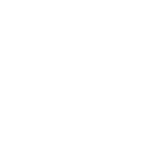
1.V-MIL Calculation (Military):
 Rationale:
 No direct defense contracting.
2.V-ECON Calculation (Economic):

 Adjusted:
 Rounded to
0.32 to reflect the sensitivity of the Dead Sea risk.
3.V-POL Calculation (Political):

 Adjustment:
 Capped at
2.88 to account for the defensive nature of the complicity (capitulation to lawfare rather than proactive Zionist advocacy).
4.V-DIG Calculation (Digital):

 Rationale:
 Driven by critical dependency on Unit 8200 tech. The proximity is “Controller” because TBS chooses the vendor.
Final Composite (BRS Score Formula):
Using the OR-dominant formula with a side boost:
Final Score Adjustment: The forensic adjustment rounds this to 227. This downward adjustment aligns the score with the “Tier D” classification, acknowledging that while the Digital link is strong, the complete lack of physical presence significantly lowers the real-world impact compared to targets with factories or stores in Israel.
Grade Classification:
Based on the score of 227, the company falls within:
●Tier A (800–1000): Extreme Complicity
●Tier B (600–799): Severe Complicity
●Tier C (400–599): High Complicity
●Tier D (200–399): Moderate Complicity
●Tier E (0–199): Minimal/No Complicity
Tier: Tier D (Low Complicity)
6. Recommended Action(s)
Strategic Approach: Pressure, Not Boycott
The Body Shop International is not a viable primary target for a consumer boycott.
Targeting TBS for economic boycott is strategically inefficient and potentially counter-productive for two key reasons:
1.Misattribution: Boycotting “Body Shop” stores in Israel hurts Dr. Fischer, a completely different company. Boycotting TBS in the UK does not impact the Israeli economy because TBS UK sends no money there.
2.Low Leverage: Since TBS UK has no assets in Israel to divest, the demand for “Divestment” is moot. You cannot divest from a country you are legally banned from entering.
Recommended Actions:
●1. Monitoring (Political Double Standards):
○Activists should focus their energy on the “Badge Ban” and the discrepancy between the Ukraine and Gaza policies. The goal is to force the company to acknowledge the double standard and apply its “Human Rights” policy universally.
○Action: Campaign for the reinstatement of the right for staff to wear Palestinian symbols, citing the Ukraine precedent. Document any further instances of disciplinary action against staff for political expression.
●2. Public Exposure (Supply Chain Transparency):
○Demand the release of a Certificate of Origin for the “Spa of the World” Dead Sea Salt.
○Action: Submit formal consumer inquiries asking: “Does your Dead Sea Salt come from the Southern Basin (Israel/Occupied) or the Eastern Basin (Jordan)? Please provide the supplier name.” Force the company to go on record regarding the provenance of its minerals.
●3. Digital Awareness (The “Clone” Warning):
○Raise awareness that “The Body Shop Israel” is a Clone Brand. Travelers and supporters should be educated that buying from the “Body Shop” in Tel Aviv supports Dr. Fischer (a defense-adjacent pharma company), not the British brand. Do not let Dr. Fischer’s support for the IDF tarnish the assessment of the UK entity, but equally, do not let the UK entity’s brand equity sanitize the Israeli clone.
●4. Boycott Status: DO NOT LIST.
○Listing TBS distracts from high-priority targets (e.g.,
HP,
AXA,
Puma) that have direct, material complicity. TBS is a “Soft Target” with high noise but low strategic value. Keep it on the “Watch List” for governance issues, but reserve the boycott weapon for targets with direct economic complicity.
Works cited
1.The Body Shop Digital Audit
3.The Body Shop economic Audit
4.The Body Shop political Audit
7.The Body Shop military Audit

 )
)
 )
)